

The Lost Art of Spiritual Realization: Beyond Modern Self-Help
In an age where self-realization has been reduced to a psychological checklist of personal ambitions and career milestones, the ancient Hindu understanding of anubhuti—direct spiritual experience—stands as a profound counterpoint. Satguru Bodhinatha Veylanswami recently addressed this very confusion during an online satsang, drawing a sharp distinction between contemporary self-actualization and authentic spiritual knowing.
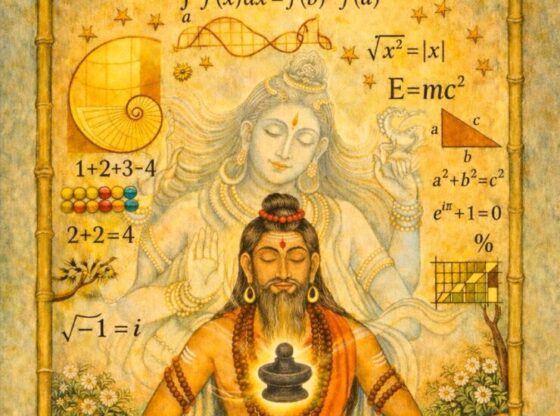
“Just as one cannot begin studying mathematics with calculus, one cannot begin the spiritual path with divine realization,” the Satguru explained. The modern secular concept of self-realization, heavily influenced by Abraham Maslow’s hierarchy of needs, has been co-opted by life coaches and motivational speakers to describe the fulfillment of personal desires and external achievements.
In the yogic traditions, however, self-realization points to something far deeper—not intellectual understanding but direct, experiential knowing of spiritual truths. The Satguru offered a clarifying example: “One may intellectually understand that the soul’s nature is an inner light, the Atma jyoti. But this understanding alone is not anubhuti. True realization comes only when one directly experiences that luminous nature within.”
This distinction between knowing about and knowing through experience remains the forgotten heart of Hindu spirituality—a wisdom the modern world desperately needs to rediscover.