
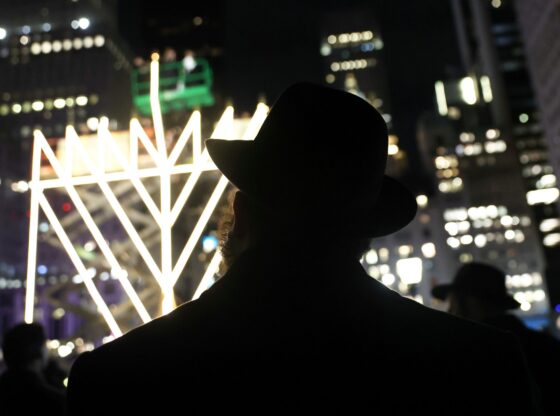

The Kippah in the Crossfire: What Rising Insecurity Reveals About American Jewish Identity
In the year since October 7, 2023, a quiet spiritual crisis has unfolded across American Jewish life—not in synagogues or study halls, but on sidewalks and city streets. A new AP-NORC poll reveals that roughly 3 in 10 Jewish adults have experienced physical assault, verbal abuse, or harassment because of their Jewish background. For many, the act of wearing a kippah or Star of David has become an act of vulnerability rather than devotion.
“That person, they don’t know anything about me. They don’t know my politics. They don’t know my beliefs,” said Hal Guberman of New Jersey, recalling a stranger’s slur shouted from a passing car. “But they saw me being visibly Jewish, and they made an opinion about me.”
The survey points to a deeper spiritual rupture: 6 in 10 Jewish adults now view prejudice against Jews as a “very” or “extremely” serious problem, with those emotionally attached to Israel feeling the most exposed. As bipartisan support for Israel fractures, the ancient question of what it means to be visibly Jewish in a hostile world has returned with fresh urgency. The poll suggests that safety is not merely a political issue but a spiritual one—testing how a community balances public identity with personal security in an age of rising animosity.