
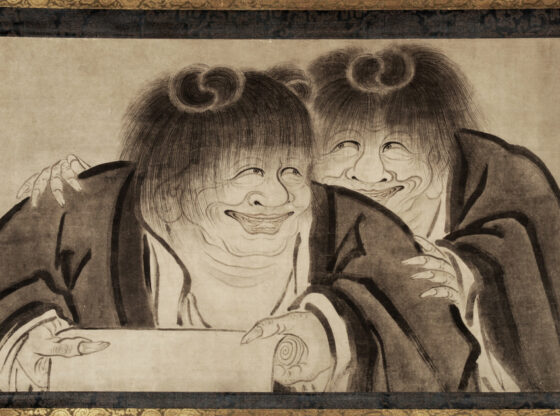

The Hidden Wisdom of Tang Dynasty Eccentrics: What Hanshan and Shide Teach About Spiritual Sight
In the tangled records of Tang dynasty China, where historical fact blurs with legend, a story emerges that challenges how we perceive holiness. The tale of Hanshan and Shide—two eccentric figures associated with Guoqing Temple—offers more than folklore; it presents a spiritual teaching about seeing beyond appearances.
The narrative hinges on a government official named Lu Qiuyin, whose very existence remains uncertain. Yet this uncertainty itself carries meaning. As the account notes, without Lu “this story won’t go very far, so we assume that he did exist.” This willingness to hold historical ambiguity while pursuing spiritual truth mirrors the Buddhist teaching of skillful means—where the story’s wisdom matters more than its factual precision.
Lu’s journey from the dust of Chang’an to the fertile lands of Taizhou represents a spiritual transition. When he arrives at Guoqing Temple, he encounters not dignified monks but wild-looking figures—Hanshan, often depicted holding a scroll or broom, and Shide, his companion. These were no ordinary temple residents. They laughed at formal ceremonies, spoke in riddles, and disappeared into mountain caves.
The spiritual lesson lies in Lu’s initial blindness. He expected holiness to wear recognizable robes. Instead, he found wisdom in those society dismissed as madmen. The tradition reminds us that true spiritual perception requires looking past our preconceptions of what enlightenment should look like—and recognizing the sacred in the unexpected.