
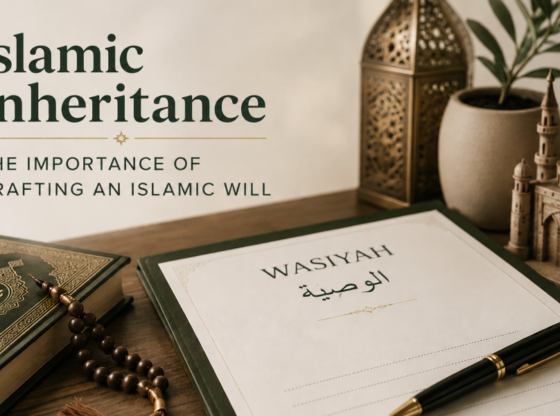

In an era where material accumulation often defines success, Islamic inheritance law offers a profound counter-narrative: wealth is not merely a personal possession but a trust to be distributed with divine precision. The rules of inheritance in Islam, rooted in the Qur’an and refined through centuries of juristic scholarship, represent what scholars call the “final act of justice” — a spiritual obligation that transcends the grave.
According to Islamic jurisprudence, particularly within the Hanbali school, the division of an estate is not left to human whim. Allah has prescribed fixed shares for specific heirs: the spouse, children, and parents receive portions that reflect both love and responsibility. A husband, for instance, inherits half of his wife’s estate if she has no child, but only a quarter if she does. Such calculations are not arbitrary; they embody a divine calculus that balances need, relationship, and societal stability.
Yet, as one legal scholar notes, “the components of inheritance require many years of deep study under a qualified teacher.” This is not a DIY affair. In the UK, where Muslims face unique economic pressures — including higher rates of overcrowded housing and lower homeownership — the stakes are even higher. A will that complies with both Islamic law and domestic legislation is not merely a legal document; it is an act of worship, a final testament to one’s faith in divine justice.
For the seeker of wisdom, the lesson is clear: how we distribute what we leave behind reveals what we truly valued in life. The inheritance is not about wealth — it is about righteousness.