
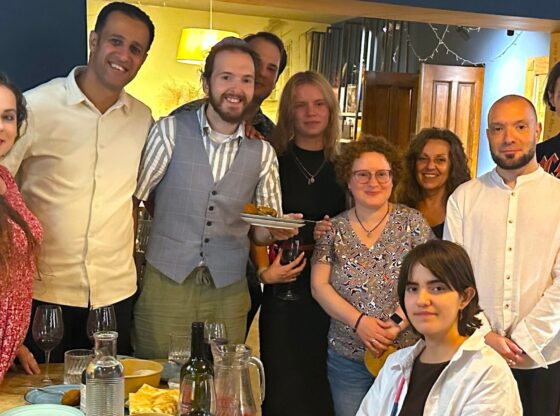

The Cherry Tree Shabbat: How Ancient Hospitality Is Reshaping Jewish Life in the Caucasus
In Yerevan, beneath a cherry tree beside a coffee shop, a gathering of Jews and Muslims recently recited the ancient words of “Lecha Dodi” together—a scene that transcends politics and speaks to the soul of diaspora survival. This small but vibrant Shabbat dinner, organized by Yerevan Jewish Home, reflects a deeper spiritual truth: that sacred community often flourishes most in places of historical tension.
The Ottoman genocide of 1.5 million Armenians remains a wound that has strained ties between Jerusalem and Yerevan for decades. Yet as Samson Karapetyan—himself a living bridge between Armenian Christianity and Jewish tradition—lifted a glass of kosher Georgian wine, he embodied what the mystics call *tikkun*, or repair. “I’m so glad we have a community here,” said Ekaterina Goldschmidt, a landscape architect who brought her dog to the gathering. Her words echo the ancient Jewish teaching that wherever ten gather for holiness, the Divine presence dwells.
The influx of up to 2,000 Jewish refugees from Russia and Ukraine has transformed a dwindling community of pensioners into a living testament to resilience. This is not merely demographic change; it is spiritual renewal—a reminder that exile, while painful, can also be a vessel for sacred rebirth.