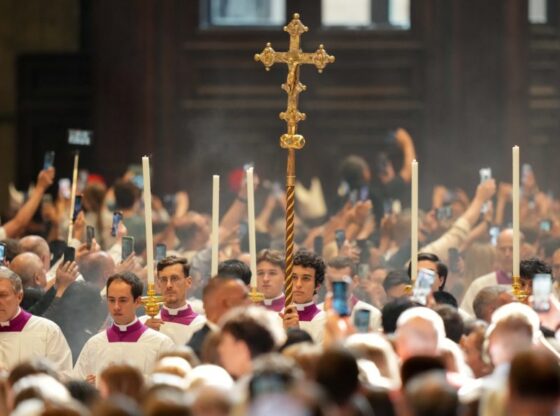

In a quiet but momentous audience on June 30, Pope Leo XIV received an Orthodox delegation from the Ecumenical Patriarchate of Constantinople, who had traveled to Rome for the feast of Sts. Peter and Paul. Standing before the tomb of the Apostle Peter, the pope did not merely offer the customary greetings of fraternal goodwill. Instead, he cast a vision that reaches far beyond the usual protocols of interfaith dialogue: a call for all Christian denominations to walk together toward the year 2033, the bimillennial anniversary of the Redemption—the death and resurrection of Jesus Christ. “May the journey towards the celebration of the second millennium of the Redemption in 2033 be undertaken together by all the Christian denominations of the world,” he said, “rediscovering the gift and the call to be witnesses to the Risen One.”
This is not a mere scheduling note for a future Jubilee. It is a spiritual summons that reorients the entire purpose of Christian unity. For decades, ecumenical efforts have often focused on resolving doctrinal disputes, healing historical wounds, or seeking a common administrative structure. Pope Leo’s proposal cuts through those tangled vines by pointing to a primal, shared event: the Paschal Mystery itself. The 2,000th anniversary of the Redemption is not a Catholic milestone to be managed; it is a cosmic hinge upon which all Christian identity hangs. By suggesting that the journey toward 2033 be undertaken together, the pope is inviting the Church to rediscover that unity is not the prize we win after we agree, but the gift we receive when we stand together before the empty tomb.
The deeper context of this appeal is rooted in the geography of salvation. During his first international trip to Turkey and Lebanon in November, Pope Leo proposed that Christian leaders might gather in 2033 at the Cenacle in Jerusalem—the traditional site of the Last Supper and of Pentecost. This is no arbitrary venue. The Cenacle is where Christ washed his disciples’ feet, instituting the new commandment of love. It is where the Holy Spirit descended, birthing the Church as a community of witness. To gather there, together, would be to return to the very source of Christian life: the self-emptying love of the Son and the outpouring of the Spirit. It would be a visible sign that the divisions of history are not the final word, and that the Risen One continues to call his scattered flock into one fold under one Shepherd.
For the seeker of wisdom, this invitation carries a profound personal takeaway. The journey toward 2033 is not only for bishops and patriarchs; it is a call for every believer to become a witness. The word “martyr” in Greek means witness, and the early Church understood that unity was forged not in committees but in the shared confession of Christ crucified and risen. Pope Leo’s vision asks each of us: Are we willing to let the Redemption—the event that reconciles heaven and earth—become the center that draws us out of our isolation? The path to unity begins not with a document, but with a prayer, a foot-washing, and a willingness to stand together at the place where death met its defeat. The Cenacle beckons, and the journey has already begun.