

Sacred Movement: How Vajrayana Dance Transforms Gesture into Grace
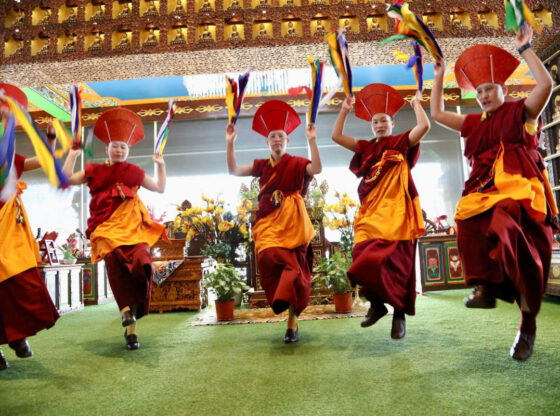
In the hushed atmosphere of Tara Mandala’s prayer hall, silk-clad dancers trace a grapevine step that is far more than choreography—it is a living liturgy. This is the “Chötreng,” or Garland of Offerings, a ritual dance performed during the White Dakini Drupchen that transmutes physical motion into a vehicle for spiritual generosity. For the uninitiated, it might appear as mere pageantry, but for Vajrayana practitioners, every sway and mudra is a deliberate act of giving.
The practice rests on a profound principle: that the body itself can be an instrument of awakening. As one Bhutanese cham master explained, “Everyone ─ gods and humans alike ─ love dance—just as they love flowers. No one can resist the beauty.” This universal appeal is precisely why dance holds invocatory power, calling divine qualities into tangible presence. The late Nyingma master Thinley Norbu Rinpoche echoed this sentiment, writing that in the Vajrayana tradition, “everything is turned into virtue, including all movement.”
Here, the dancer visualizes offering sixteen splendid gifts—musical instruments, perfume, flowers—multiplied infinitely and delivered by Wisdom Goddesses. This is not mere symbolism; it is the cultivation of dana, the transcendent paramita of generosity. By offering beauty, the practitioner dissolves attachment and opens the heart, transforming even the most mundane gesture into a radiant expression of the sacred.