
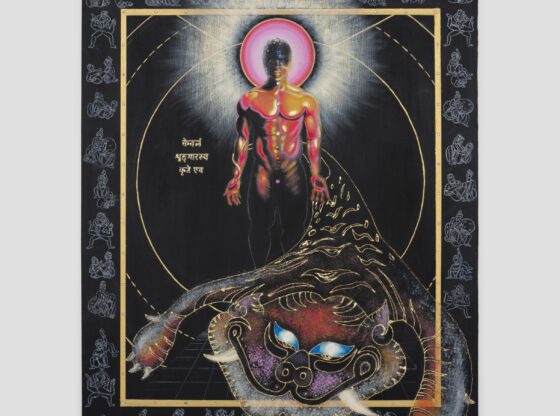

Sacred Geometry Meets Modern Canvas: The Feminine Principle in Tibetan Art
In the bustling heart of Manhattan’s art scene, a quiet revolution is unfolding—one that bridges the ancient Menri-style thangka tradition with contemporary visual language. Naomi Basu, a New Delhi–born painter, is reimagining sacred Tibetan imagery for a modern audience, centering her work on what she calls “the feminine principle” within Buddhist iconography.
Basu’s journey to Tibetan Buddhism came not through monastic training but through familial memory. “My grandpa was Buddhist, so my brother and I grew up being familiar with some of the imagery,” she shares. “He would frequently gift us Buddha statuettes.” This early exposure planted seeds that would later blossom into a dedicated artistic practice exploring yab-yum—the union of masculine and feminine energies.
Her paintings, including Plane and Projection in Yab-Yum and Plane and Depth in Yab-Yum, balance devotion and decoration, transforming sacred symbols into portals for contemplation. Basu’s work follows in the footsteps of her teacher, Tibetan thangka master Pema Rinzin, who himself navigated the shift from traditional Asian art to Western contemporary contexts.
For practitioners and seekers alike, Basu’s art offers a fresh entry point into Tibetan Buddhist visual culture—one that honors tradition while speaking the aesthetic language of our time. Her current exhibition, “High Visibility” at GOCA by Garde, continues this dialogue between the eternal and the ephemeral.