Robert A.F. Thurman, Pioneering Buddhist Scholar and First American Tibetan Monk, Dies at 84
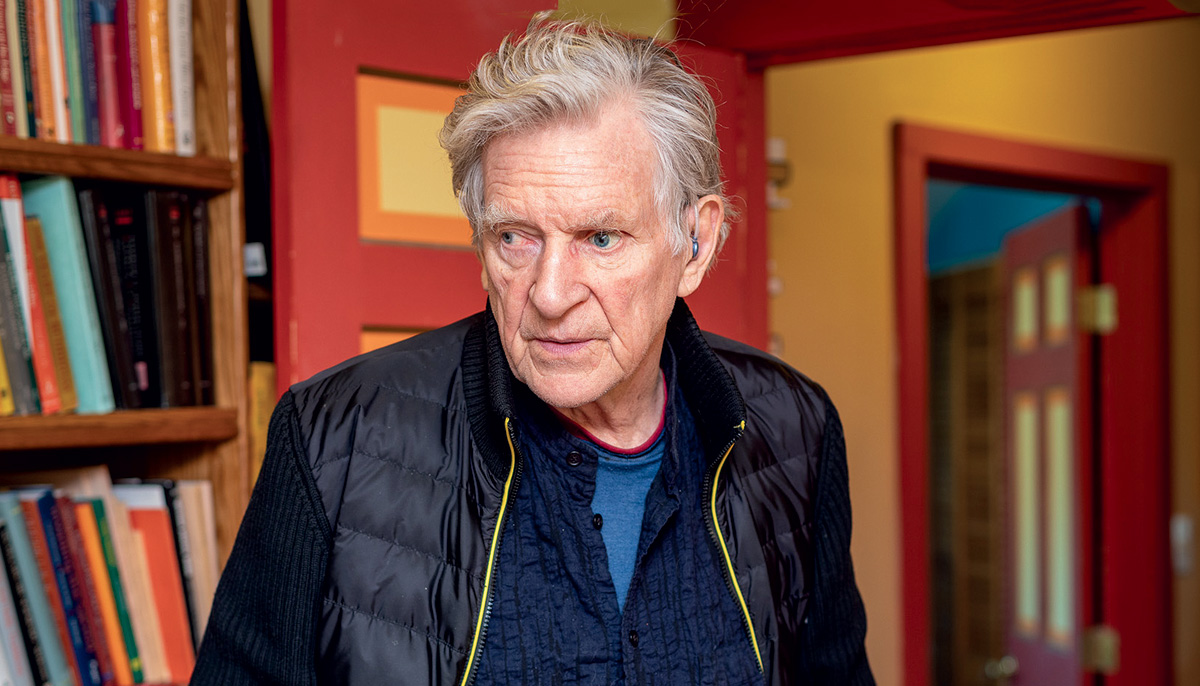
WHO: Robert A.F. Thurman — renowned Buddhist scholar, author, activist, Columbia University professor, and co-founder of Tibet House US. He was the first American ordained as a Tibetan Buddhist monk by the Dalai Lama himself.
WHAT: Thurman died on Tuesday, June 16, 2026, at his home in Woodstock, New York. He was 84. His passing was announced by Lion's Roar, the leading Buddhist publication, which described him as "a giant in the transmission of Tibetan Buddhism to the West."
WHEN: June 16, 2026.
WHERE: Woodstock, New York.
WHY IT MATTERS: Few individuals have done more to bring the depth of Tibetan Buddhist philosophy to the Western world. Thurman's unique position — Harvard-educated intellectual, ordained monk turned householder, Hollywood-connected father of Uma Thurman, and lifelong friend of the Dalai Lama — made him an irreplaceable bridge between ancient wisdom and modern culture.

The Dalai Lama visits Tibet House U.S., founded at his request. Left to right: Philip Glass, Robert Thurman, Elizabeth Avedon, Elsie Walker, and Richard Gere. Photo by Sonam Zoksang. Source: Lion's Roar.
A Life Between Worlds
Born in 1941, Thurman's path to Buddhism was circuitous. He lost an eye in a 1961 car racing accident — an event he later described as the catalyst that turned his attention inward. He travelled to India, studied under Mongolian lama Geshe Wangyal, and in 1965 became the first American ordained as a Tibetan Buddhist monk by the Fourteenth Dalai Lama.
He gave up monastic life two years later to marry Nena von Schlebrügge, a former model, and went on to earn a Ph.D. from Harvard, where he became one of the first Western scholars to earn a doctorate in Indo-Tibetan Buddhist studies. He joined Columbia University's Department of Religion in 1973, where he taught for more than three decades, training generations of scholars and introducing thousands of students to Buddhist philosophy.
In 1987, at the Dalai Lama's request, Thurman co-founded Tibet House US alongside Richard Gere and Philip Glass — an organisation dedicated to preserving Tibetan culture that became a cultural institution in its own right.
The Thurman Contribution
Thurman was often blunt about what he saw as the shallowness of Western approaches to meditation. In a profile interview with Lion's Roar, he said: "Meditation will not solve the problem if you don't learn something. In American Buddhism, the main thing has been to just meditate and it will all be solved. That is a bunch of b.s. Meditation is essential, but only after learning something."
He published more than a dozen books, including Why the Dalai Lama Matters and a celebrated translation of the Tibetan Book of the Dead. His translations brought esoteric Tibetan texts into the mainstream of Western philosophy.
From the perspective of the Sacred Atlantean Brotherhood, Thurman's life exemplified a principle that resonates across traditions: the marriage of deep learning with lived practice. He was neither a scholar who merely studied texts from a distance nor a practitioner who rejected intellectual rigour. He embodied the integration of wisdom and method — a model that mirrors the Brotherhood's own emphasis on direct knowledge over blind belief.
Multi-Perspective Context
Thurman's influence was not without its critics. Some traditional Tibetan monks questioned whether a married householder who moved between Hollywood and academia could authentically represent the monastic tradition. Others in the scholarly community argued that his celebrity status sometimes overshadowed the precision of his academic work.
Yet his colleague Peter Awn, chair of Columbia's Department of Religion, offered a measured assessment: "He has really brought Indo-Tibetan Buddhism to a level of awareness and intellectual engagement among Americans that did not exist before him. That's not an easy line to walk — the ability to present oneself as rigorously academic, critical as well as positive, but also maintain a very public engagement with your own personal commitment."
The Legacy
Thurman is survived by his wife Nena, their four children — including actress Uma Thurman — and a vast network of students, colleagues, and spiritual practitioners whose lives he touched. His impact on the landscape of American Buddhism is immeasurable. At a time when mindfulness has become a commodity and the depth of dharma is often diluted, Thurman never stopped insisting that real transformation requires real study — that the path to awakening is not a shortcut but a lifelong discipline of learning, practice, and service.
Sources: Lion's Roar (June 16, 2026) — "Remembering Robert A.F. Thurman (1941-2026)"