
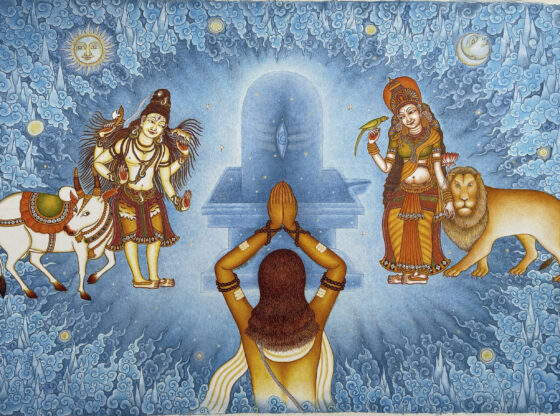

In the quiet corridors of a Tamil temple, a young boy once sobbed at the feet of God, pleading for light. That boy, Dr. B. Natarajan, would later translate the 1,452 songs of the poet-saint Tayumanavar—a body of work that the monks of Satguru Sivaya Subramuniyaswami have now prepared as an illustrated book, *Tayumanavar’s Songs to Siva*. But the real story is not about the translation. It is about the question that haunts every seeker: “Who am I in the vastness of cosmic phenomena?”
Tayumanavar, a 17th-century Tamil sage, answered that question not with doctrine, but with mystic poetry that dissolves the boundary between the devotee and the Divine. His songs, sung by an odhuvar and recorded for modern ears, are not mere verses—they are living transmissions of Saiva Siddhanta. Natarajan recalls his own school-day reflections: “Who feels in the senses and thinks in the mind and dreams in my fancy?” This is the core of Tayumanavar’s teaching: the self is not the thinker, but the witness behind the thinker.
The saint’s philosophy offers a radical embrace of grace as the only refuge. When Natarajan, overwhelmed by worldly harshness, surrendered at the temple, he felt “a warm current traversing my heart and brain and a descent from above.” That current is the same one that flows through Tayumanavar’s songs—a reminder that the mystery of life is not solved by intellect, but dissolved by surrender. For those seeking wisdom, these songs are not poetry to be read, but a path to be walked.
#SpiritualNews · #FaithAndCulture · #GlobalSpirituality