
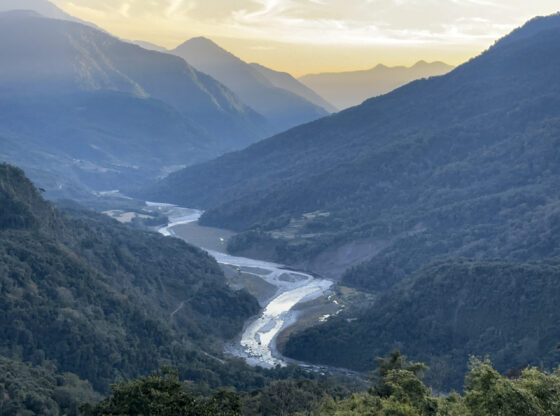

In the spiritual geography of the Himalayas, few rivers carry as much theological weight as the Brahmaputra—the only major river in India bearing a masculine name, literally “son of Lord Brahma.” Emerging from the same sacred landscape as Lake Manasarovar and Mount Kailash, this 1,900-mile waterway challenges modern assumptions about what it means to revere nature as divine.
For the Assamese devotees who live along its banks, the Brahmaputra is not a resource to be managed but a person to be honored. “We call it the Brahmaputra because it is the son of Lord Brahma,” one local woman explained to travelers Ellen Coon and Thomas Kelly during their 2025 pilgrimage along the river’s Indian course. This living relationship manifests in daily devotion, even as the river shifts between life-giving abundance and destructive fury.
The deeper question facing Hindu communities today is whether economic frameworks can coexist with sacred perception. As hydroelectric dams multiply along the Brahmaputra’s course through Tibet, Arunachal Pradesh, and Assam, devotees are forced to ask: What is lost when a deity becomes a commodity? The river’s devotees remind us that reverence is not merely sentiment—it is a way of seeing that protects what calculation cannot.
#SpiritualNews · #FaithAndCulture · #GlobalSpirituality