
Radical Emptiness: How the Misfit Seekers of Greenwich Village Are Reviving the Buddha’s Forgotten Revolution
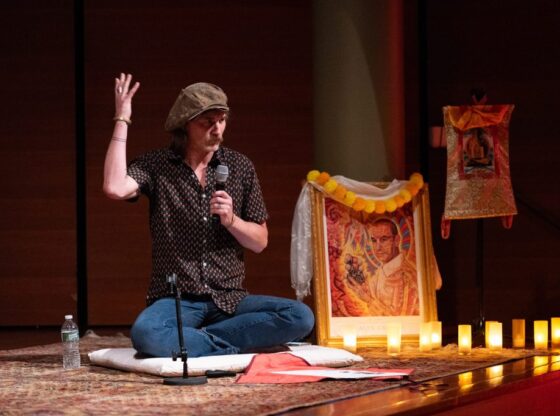
In a neighborhood where luxury condos now tower over the former haunts of beatniks and activists, a quiet insurgency is taking place. Chris Kelley, a teacher at Eugene Lang College, has spent five years guiding students through what he calls “The Buddha’s Revolution”—a course that reframes the Dharma not as passive contemplation but as a direct challenge to social and spiritual hierarchies.
Kelley, whom some might call the Village’s last countercultural holdout, draws a direct line from the historical Buddha—a prince who abandoned caste privilege and rejected Brahminical authority—to the modern “outrider” tradition of tantric practitioners and psychonauts. “Shakyamuni Buddha himself was the original spiritual revolutionary,” Kelley explains, “a man who abandoned wealth and power to seek truth for himself.”
His work extends beyond the classroom. Through Psychedelic Sangha, a community for “misfit seekers,” Kelley has orchestrated chöd rituals set to heavy metal and performed prostrations across every bridge in New York City as performance art. These acts, he suggests, embody the radical emptiness of the Heart Sutra—a teaching that dismantles not only the self but the very structures we mistake for permanence.
For those seeking wisdom in an age of spiritual consumerism, Kelley’s message is clear: the Buddha’s revolution was never about comfortable retreat. It was, and remains, a call to dismantle the illusions we cling to—both within and without.