
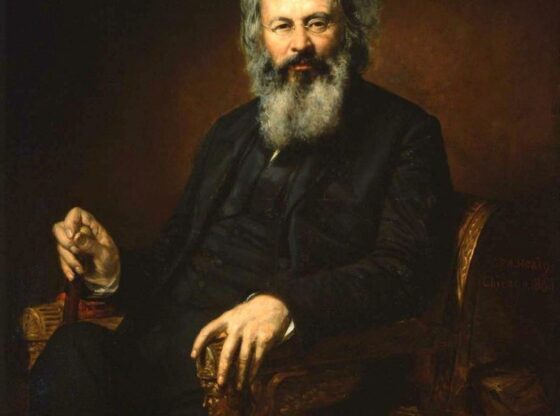

Providence and Patriotism: The Forgotten Catholic Vision of America’s Divine Mission
In the annals of American religious thought, few figures have been as thoroughly erased as Orestes Brownson—a 19th-century intellectual whose journey from Protestant pastor to Catholic convert produced a radical reinterpretation of the nation’s founding. Brownson saw not merely a political revolution in 1776, but a providential act of God, a deliberate intervention designed to establish a new order of civilization for the world.
His central insight, drawn from the Declaration of Independence, was that the phrase “all men are created equal” could only be fully realized in communion with the Creator. Brownson argued that human beings cannot pursue happiness in isolation; they must exist in relationship with God, with themselves, with others, and with nature itself. This philosophical conviction led him into the Catholic Church in 1844, and it transformed his understanding of American identity.
“Providence has great designs in our regard,” Brownson wrote in 1856, addressing Catholic immigrants who often felt alienated from their new homeland. “He has given us the most glorious mission ever given to any people.” For Brownson, authentic patriotism was not blind nationalism but recognition of a sacred calling—a charge to build a society where equality before God becomes the foundation of earthly governance.