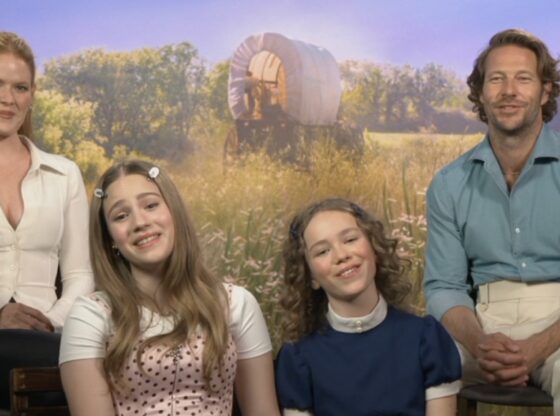

The announcement of a new Netflix adaptation of Laura Ingalls Wilder’s “Little House on the Prairie” books has drawn fresh attention to the spiritual undercurrents that have sustained these stories for generations. In a recent interview, stars Luke Bracey, Crosby Fitzgerald, Skywalker Hughes, and Alice Halsey shared how their upcoming series seeks to honor the spirit of Wilder’s work—not merely as historical fiction, but as a testament to a way of life rooted in faith, resilience, and reverence for the natural world.
For those who have read Wilder’s books closely, the spiritual dimension is unmistakable. The Ingalls family’s journey across the American frontier was not simply a physical migration but a pilgrimage of the soul. Charles “Pa” Ingalls, played by Bracey in the new series, embodies a quiet, lived faith—one that finds God not in grand cathedrals but in the rhythm of seasons, the labor of hands, and the bonds of family. As Bracey noted in the interview, “The books are about a family that relies on each other and on their faith to get through incredibly hard times.” This echoes a truth found across spiritual traditions: that hardship, when met with trust and community, becomes a crucible for transformation.
The deeper context here is that Wilder’s stories resonate because they tap into a universal longing for simplicity and meaning in an age of distraction. In Buddhism, the concept of “appamada”—heedfulness or diligent awareness—mirrors the Ingalls family’s approach to life. Every chore, from churning butter to mending fences, becomes an act of mindfulness. In Christian mysticism, this is the “sacrament of the present moment,” where ordinary tasks are infused with divine presence. Wilder herself wrote, “The real things haven’t changed. It is still best to be honest and truthful; to make the most of what we have; to be happy with simple pleasures; and to be courageous.” This is not mere nostalgia; it is a spiritual discipline.
For the modern reader—or viewer—the takeaway is profound. The new Netflix series, as the cast emphasizes, aims to capture “the heart” of Wilder’s books rather than simply replicate their plot points. This heart is a call to re-examine our own lives: Where have we traded depth for speed? Where have we forgotten that the sacred is often found in the small, the overlooked, the daily? In a world that prizes accumulation and achievement, the Ingalls family offers a counter-witness—a reminder that true wealth is measured not in possessions but in presence, not in comfort but in courage.
As the cast prepares to bring these stories to a new generation, viewers are invited to see beyond the bonnets and covered wagons. At its core, “Little House on the Prairie” is a spiritual text—one that whispers of a God who walks with us through the wilderness, who provides manna in the form of a good harvest and a warm fire, and who calls us to love our neighbor as ourselves. Whether you encounter it on Netflix or in the pages of a well-worn book, the message remains: the greatest journey is not across the prairie, but into the heart of what it means to be fully alive.