
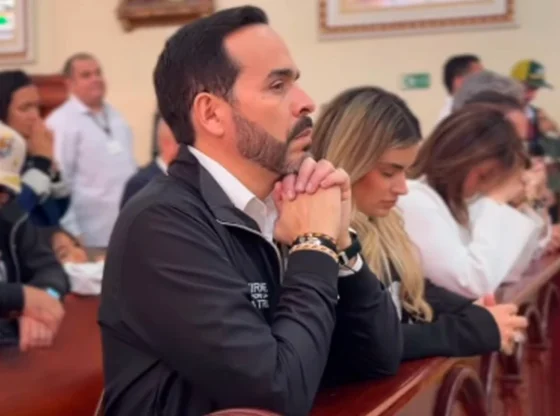

In a striking departure from the secular conventions of modern governance, Colombia’s President-elect Abelardo de la Espriella has embarked on a spiritual tour of Catholic shrines, publicly consecrating his presidency and nation to divine protection. Beginning at the shrine of El Morro, where he offered his life and service to the Virgin Mary, de la Espriella then traveled to La Guajira to pray at Our Lady of the Remedies for healthcare workers, and to the basilica of the Lord of Miracles in Sucre, where he sought peace for Colombia’s security forces and families. His journey concluded at the shrine of St. Peter Claver in Cartagena, where he prayed for the vulnerable, declaring on social media that this is “the pilgrimage of hope for the miracle homeland.”
This act carries profound spiritual weight, transcending mere political theater. De la Espriella stated, “When a people places its destiny in God’s hands, it always finds hope.” In an age where leadership is often reduced to policy and polling, this pilgrimage reminds us that authentic governance has always been a sacred trust. Across wisdom traditions, from the Hebrew prophets who anointed kings to the Hindu concept of *rajadharma*—the righteous duty of a ruler—leadership is understood not as a pursuit of power but as a solemn service under a higher authority. The president-elect’s journey mirrors the ancient practice of seeking oracles and blessings before assuming the mantle of rule.
The deeper context here is the transformative power of humility before the divine. De la Espriella’s personal testimony—that the death of a loved one from COVID-19 led him to embrace the Catholic faith—reveals that his pilgrimage is not a calculated gesture but a response to suffering. The shrines he visited are not mere tourist sites; they are thresholds where heaven meets earth. Our Lady of the Remedies, for instance, is traditionally invoked as a healer, while the Lord of Miracles represents the hope of transformation in the face of despair. By praying at these places, de la Espriella aligns his political authority with the ancient Christian teaching that “there is no authority except from God” (Romans 13:1). The Redemptorist community wisely clarified that the shrine did not endorse any candidate, preserving the sacred space as open to all pilgrims—a reminder that spiritual power cannot be co-opted by earthly agendas.
For the reader seeking wisdom, this event offers a vital takeaway: leadership, in any sphere, is fundamentally a spiritual act. Whether you lead a nation, a family, or a community, the call is to consecrate your service to something greater than yourself. De la Espriella’s pilgrimage invites us to ask: What shrines do we visit in our own lives—the places where we surrender control and seek guidance? The practice of pilgrimage, common to nearly every religious tradition, teaches that hope is not found in human plans alone but in the act of placing our destiny in hands wiser than our own. As the president-elect continues “traveling this path,” we are reminded that the most powerful leaders are those who kneel first.