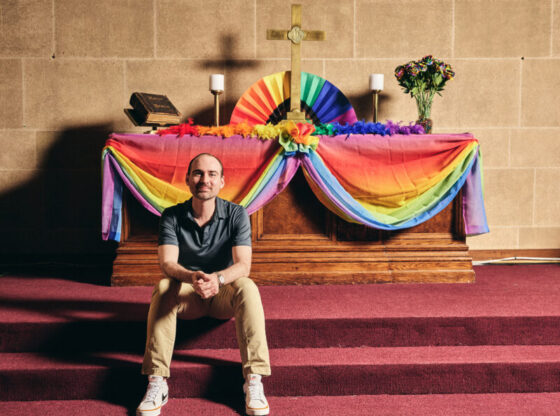

When Jacob May sat across from his pastor at a Chipotle in rural Virginia in 2014, the burritos were not the only thing being consumed. Over carnitas, his pastor pointed to the so-called clobber passages—Bible verses historically weaponized against LGBTQ+ souls—while May offered counter-readings of mistranslation and historical context. The pastor wanted weekly meetings to teach the Southern Baptist way: that being gay meant eternal hellfire. May stopped replying. He lost his childhood church, his friendships, his entire subculture. “I just felt really alone,” he recalls. “I remember times just sitting on my bed, sobbing.”
His story echoes a profound spiritual crisis documented in a 2016 study: over 80% of LGBTQ+ people were raised in faith communities, yet nearly two-thirds of those raised Christian no longer identify as Christian. Nearly half of all Americans who leave religion cite the mistreatment of LGBTQ+ people as a key reason. Psychologist Tyler Lefevor notes that suppressing one’s identity produces real spiritual and physical consequences—PTSD, anxiety, high cortisol. “Cut off from community and a source of meaning,” he says, queer people are left unmoored. Three years after that Chipotle meeting, May walked into St. Paul’s Episcopal Church in Richmond, Virginia—an affirming congregation—and began to open his heart again. The loneliness lifted not because the clobber passages vanished, but because a different reading of Scripture appeared: one that sees the sacred already present in every soul.