

Gethsemane’s Sacred Vigil: What the Lamentations of the Theotokos Reveal About Holy Grief
In the quiet dawn of Gethsemane, where olive trees have witnessed centuries of prayer, the Church of Jerusalem enacted a profound mystery this week. The Lamentations of the Dormition of the Theotokos are not merely a funeral rite—they are a theological meditation on the threshold between death and life, sorrow and glorification.
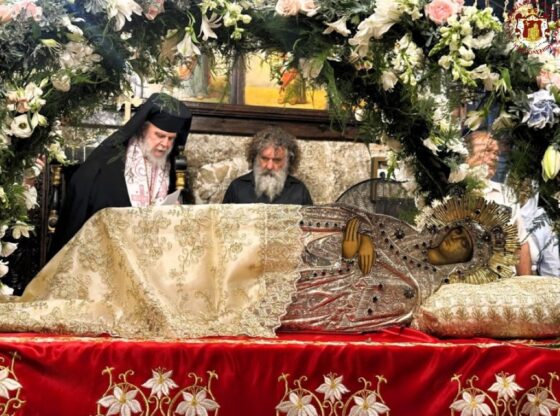
Patriarch Theophilos led the procession on foot along the Via Dolorosa, retracing the very path of Christ’s passion, before descending to the Tomb of the Virgin Mary. The three Stasis of Lamentations, chanted around the beautifully adorned Holy Epitaph, mirror the ancient Jewish mourning customs while transfigured by Christian hope. Censing during the First Stasis, the Patriarch honored the Mother of God as the living Ark of the Covenant, the vessel through whom the Word became flesh.
Archbishop Aristarchos of Constantina delivered the festal homily, reminding the faithful that the Church celebrates her who is “beyond all praise, pure Mother of God.” In the Orthodox tradition, Mary’s Dormition is not an ending but a translation—a gentle falling asleep that reveals the destiny awaiting all who are united to Christ. Her tomb, venerated at Gethsemane, stands empty, pointing toward the resurrection of all flesh.
This service teaches us that authentic spirituality does not deny grief but sanctifies it. The Lamentations transform weeping into doxology, proving that mourning can become a doorway to divine encounter.