
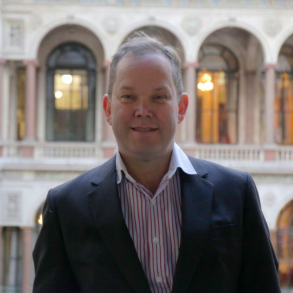

The 2004 Boxing Day tsunami remains one of the most devastating natural disasters in modern history, claiming over 230,000 lives across fourteen countries. In its aftermath, British diplomat Ian Proud was deployed to assist with the relief efforts in Sri Lanka, where he witnessed scenes of unimaginable destruction and human suffering. For years afterward, Proud suffered from post-traumatic stress disorder, haunted by the memories of what he had seen. His path to recovery, however, took an unexpected turn—not through traditional therapy alone, but through the act of writing fiction and a deepening of his Christian faith.
Proud’s experience speaks to a profound spiritual truth: that the soul often finds its way back to wholeness through creative expression. “It was a very traumatic time,” Proud reflects, describing how the tsunami’s aftermath remained “a very visceral thing” for him even two decades later. Rather than suppressing these memories, he chose to channel them into his novel Searching, a work that explores themes of loss, hope, and the search for meaning in the face of catastrophe. This creative process became, in his own words, “a massive part of that recovery process.”
The connection between storytelling and spiritual healing is ancient, woven into the fabric of every wisdom tradition. In Christianity, Jesus himself taught through parables—short fictional narratives that carried deeper truths about God and humanity. The Desert Fathers of the fourth century understood that the mind, when wounded, often resists direct confrontation but can be gently led toward healing through metaphor and narrative. Proud’s journey echoes this wisdom: by writing a story, he created a safe distance from his trauma while still engaging with its emotional weight. The novelist becomes, in a sense, a pilgrim walking the path of grief alongside his characters.
What makes Proud’s testimony particularly compelling is his insistence that faith and fiction are not separate realms but deeply intertwined. The act of imagining a world, of bringing order out of chaos on the page, mirrors the creative act of God described in Genesis. For the reader, Proud’s story offers a powerful takeaway: that our deepest wounds need not be our final chapter. Whether through writing, painting, music, or prayer, there is a sacred space where suffering can be transformed into something that not only heals ourselves but also offers light to others. As Proud discovered, the journey through darkness often requires a map made of words—and a faith that believes the story is not yet over.