
Buddhist Monks Complete 2,300-Mile Walk for Peace Across America — A Pilgrimage of Compassion That Captured a Nation
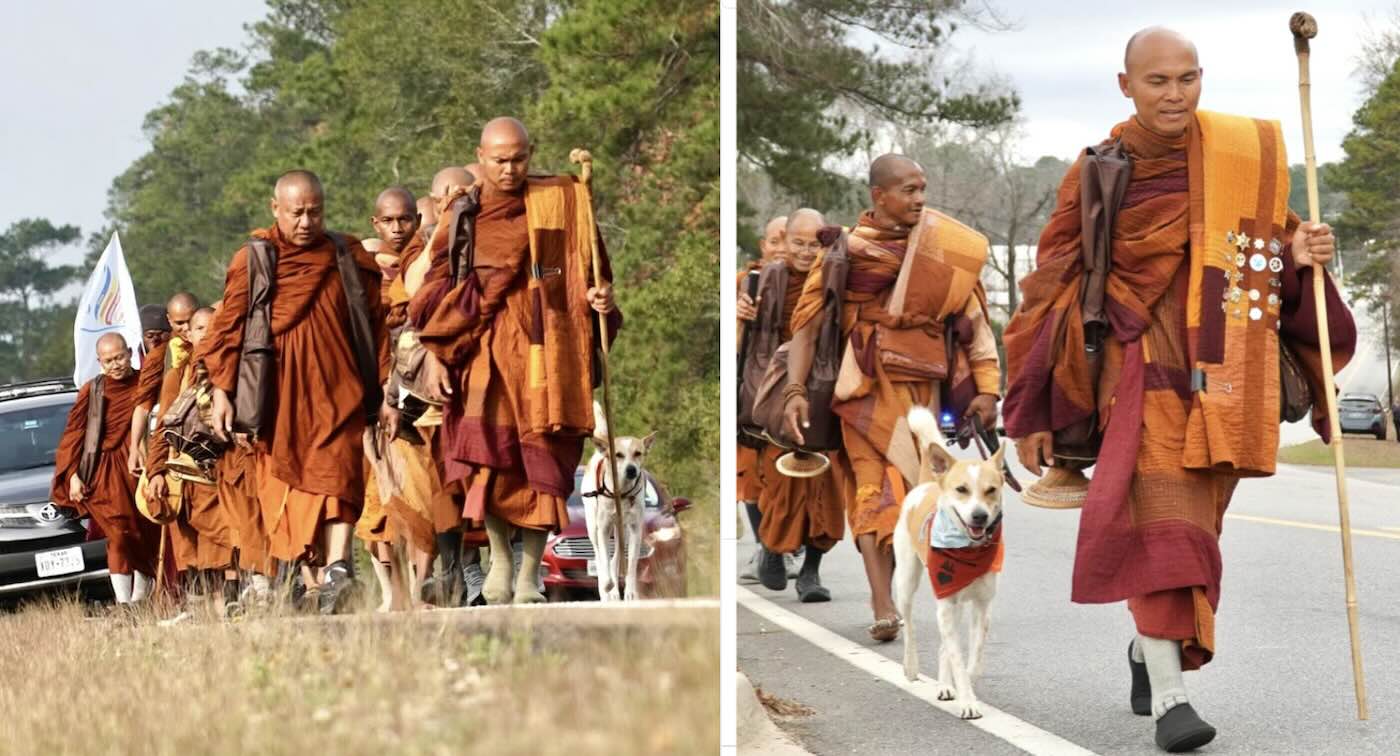
In an extraordinary display of faith, endurance, and compassion, nineteen Theravada Buddhist monks from the Huong Dao Vipassana Bhavana Center in Fort Worth, Texas have completed a 2,300-mile Walk for Peace across the United States. Their journey, which began in October 2025 and concluded in Washington, D.C., has inspired thousands and drawn global attention to the power of silent pilgrimage in a noisy age.
The monks walked barefoot through ten states — Texas, Louisiana, Mississippi, Alabama, Georgia, the Carolinas, Virginia, Maryland, and finally into the nation's capital. Their mission: to promote unity and compassion in a deeply divided world, and to petition the federal government for official recognition of Vesak, the most sacred day in the Buddhist calendar, which commemorates the birth, enlightenment, and passing of the Buddha.
Led by Bhikkhu Pannakara, the monastic pilgrims practiced dhutanga — an ancient ascetic discipline emphasizing simplicity, mindfulness, and resilience. They moved in silence, often shoeless, their saffron robes a striking contrast against the American landscape. They carried no placards and chanted no slogans. Their message was embodied in the simple act of walking itself.
The journey was not without profound hardship. In November 2025, a support vehicle accompanying the monks was struck by a truck on Highway 90 near Dayton, Texas. Two monks were injured, and Bhante Dam Phommasan ultimately required a leg amputation. Yet the group refused to abandon their pilgrimage. Bhante Dam himself, from his hospital bed, urged his fellow monks to continue. The story of their resolve spread worldwide, drawing an outpouring of prayers, donations, and support from communities across the religious spectrum.
Walking alongside the monks every step of the way was their unlikely companion: Aloka, a rescued Indian Pariah dog. Found abandoned during an earlier peace walk in India, Aloka has become a symbol of loyalty and perseverance. He was hit by a car, fell ill, and was offered rest in a support vehicle, yet chose to leap out and rejoin the march. 'He wanted to walk,' one monk recalled. 'That inspires a lot.' Social media following the Walk for Peace grew to over 60,000, with many calling Aloka the 'Peace Dog.'
The Walk for Peace is rooted in a tradition as old as Buddhism itself. The Buddha practiced cankama — walking meditation — as a core technique of mindfulness. In more recent history, figures like Thich Nhat Hanh and Maha Ghosananda revived the practice of walking for peace as a form of engaged spirituality amid war and conflict. This American pilgrimage revives that lineage, bringing an ancient Eastern contemplative practice into the heart of the modern West.
The group's arrival in Washington, D.C. was met by interfaith leaders, members of Congress, and crowds of supporters. The monks held a ceremony on the West Lawn of the Capitol, offering blessings and calling for the recognition of Vesak as a federally acknowledged holiday — a milestone that would mark a new chapter for Buddhist American communities, who number over four million nationwide.
Their journey offers a powerful counter-narrative to an age of speed and distraction. In a time when digital noise and political polarization dominate public life, the monks' slow, silent, barefoot pilgrimage across America invited people to pause, reflect, and reconnect with what is most fundamentally human: the capacity for compassion, patience, and peace. Their footsteps remain on the soil — and in the hearts of all who witnessed them pass.
#Buddhism #WalkForPeace #EasternTraditions