
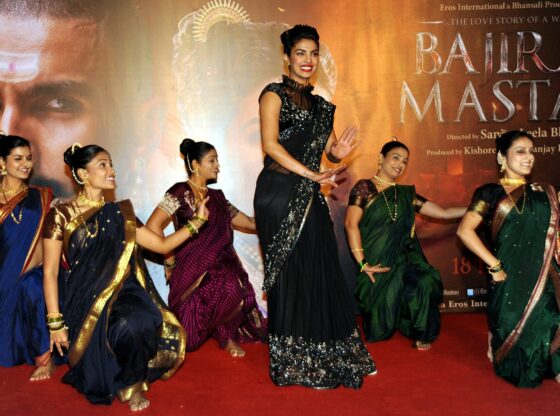

In the Methodist mission quarters of Dilkusha, Fiji—a place whose name means “Heart’s Delight” in Hindi-Urdu—a young boy found his spiritual and cultural awakening not in the church pews, but across the Rewa River. There, in a cinema hall built by a Gujarati Muslim entrepreneur, the magic of Bollywood first flickered to life. This personal journey, recounted by a scholar of Indian diaspora, reveals how cinema became a vessel for identity, devotion, and now, political transformation. What began as an escape from a drab colonial existence has evolved into a powerful projection of Hindu nationalism under Prime Minister Narendra Modi’s India.
The spiritual significance of this shift cannot be overstated. For generations of Indians abroad, Bollywood was a sacred thread connecting them to the motherland—a dharma of cultural memory. The author recalls how those films offered “a world of colour, music, and emotion” that transcended the austere Methodist teachings of his youth. In Hindu philosophy, this mirrors the concept of *lila* (divine play), where art becomes a pathway to the eternal. Today, however, that same medium is being repurposed as a tool for *rashtra dharma* (national duty), where cinematic narratives increasingly align with a singular vision of Indian identity. The films that once celebrated pluralism now often project a sanitized, majoritarian view that marginalizes the very diversity that defined Bollywood’s golden age.
This transformation reflects deeper currents in Hindu wisdom traditions. The *Bhagavad Gita* teaches that dharma is not static but must adapt to the *kala* (time) and *desha* (place). Yet, when dharma is co-opted by political power, it risks becoming *adharma*—a distortion of righteous duty. The author’s childhood in Dilkusha, a place named after a minor Indian principality and referenced in E.M. Forster’s “A Passage to India,” symbolizes the syncretic beauty of Indian culture abroad. Now, that same culture is being weaponized to erase the very hybridity that made it resilient. The *Upanishads* remind us that the divine dwells in all beings, yet the new nationalism seeks to demarcate who belongs and who does not—a departure from the inclusive spirit of *Vasudhaiva Kutumbakam* (the world is one family).
For the seeker of spiritual wisdom, the lesson is clear: art and devotion are never neutral. They carry the power to liberate or bind, depending on the intention behind them. The author’s journey from Methodist quarters to Bollywood enthusiast to critical observer mirrors the soul’s own evolution—from innocence to enchantment to discernment. As you consume media, whether sacred texts or popular cinema, ask yourself: Does this expand my heart’s delight, or does it shrink it to fit a narrow agenda? The true dharma lies not in blind allegiance to any nation or ideology, but in the eternal quest for *satya* (truth) and *prema* (love). Just as the Rewa River flowed past Dilkusha, carrying both fisher boats and colonial barges, so too must we navigate the currents of culture without losing our inner compass.