
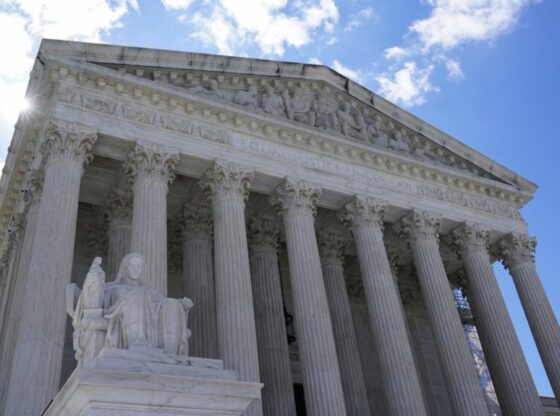

The United States Supreme Court’s decision to strike down President Donald Trump’s executive order limiting birthright citizenship has been hailed by Catholic leaders as a profound affirmation of human dignity. On June 30, the Court ruled that the order, which sought to deny automatic citizenship to children born in the U.S. to parents without permanent legal status or temporary visa holders, violated the 14th Amendment. Chief Justice John Roberts, writing for the majority, declared, “Citizenship, then and now, was the right to have rights — to freely participate in our political community.” This ruling, rooted in the Civil Rights Act of 1866 and the 14th Amendment, reaffirms that every child born on American soil possesses an inherent, unassailable claim to belonging.
Spiritually, this decision transcends legal debate and touches on a sacred truth: every human being enters the world with intrinsic worth and a divine right to be seen, named, and embraced. The Catholic Church has long taught that human dignity is not conferred by the state but is a gift from God, woven into the fabric of creation. As the Catechism of the Catholic Church states, “The human person is the only creature God has willed for its own sake” (CCC 1703). By striking down the order, the Court echoes this principle, recognizing that a child’s birthplace is not an accident but a doorway into a community that must honor their existence. This is a victory for the belief that no human life is a stranger to grace.
Drawing from the wisdom of spiritual traditions, this ruling invites reflection on the nature of covenant and hospitality. In the Hebrew Scriptures, the command to welcome the sojourner is repeated 36 times, more than any other moral law. The Prophet Isaiah declares, “Do not oppress the foreigner; the foreigner living among you must be treated as your native-born” (Isaiah 58:6-7). Similarly, Christian mystics like Thomas Merton taught that every encounter with another person is a meeting with the divine. The 14th Amendment’s guarantee of citizenship to all born here is a secular echo of this sacred hospitality—a promise that no child is a guest, but a member of the family. The Court’s decision thus becomes a spiritual act, affirming that the soul’s first breath on American soil is a claim to kinship, not a request for admission.
The takeaway for the reader is a call to see beyond politics into the mystery of human belonging. This ruling is not merely about law; it is about how we honor the sacredness of every life that enters our world. As the great spiritual teacher Henri Nouwen wrote, “Hospitality is not to change people, but to offer them space where change can take place.” By preserving birthright citizenship, the Court offers such space, reminding us that the first duty of any community is to recognize the divine image in the newborn. In a time of division, this is a quiet but powerful invitation to live out the wisdom that every soul deserves a place at the table, not as a stranger, but as a child of the same earth. Let this ruling be a mirror for our own hearts: do we see citizenship as a gift of grace or a gate to be guarded?