
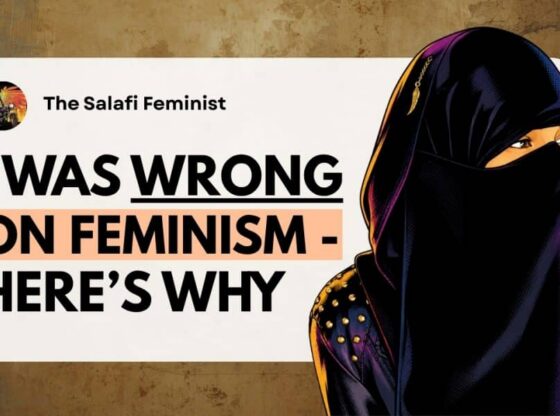

Beyond the Label: What the Feminist Question Reveals About Muslim Community Integrity
The question of why Muslim women adopt feminist frameworks often masks a deeper, more unsettling inquiry: why do communities resist self-examination? When the term “feminism” becomes a proxy for cultural anxiety, it obscures the real spiritual work required — distinguishing divine revelation from human tradition. The conflation of the Deen with cultural practice represents a profound theological confusion, one that the Qur’an itself warns against when it condemns the blind following of ancestral ways.
This discomfort with critique mirrors the jahiliyyah spirit — not as a historical artifact, but as a living tendency to defend tribal norms over prophetic justice. The Prophet Muhammad (peace be upon him) challenged the patriarchal assumptions of his society, affirming women’s spiritual equality and legal agency in ways that were revolutionary. Yet contemporary Muslim communities often cling to cultural patriarchy as if it were sacred text.
True faithfulness requires the courage to separate what is eternal from what is contingent. When Muslim women question norms, they are not necessarily abandoning Islam — they may be calling the community back to its own highest principles of justice (adl) and mercy (rahmah). The uncomfortable conversation is not about feminism versus Islam, but about whether the community can bear the weight of its own prophetic legacy.