
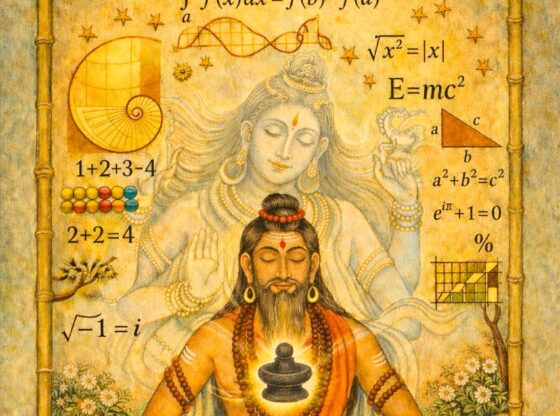

Beyond Modern Self-Help: The Ancient Hindu Art of Direct Spiritual Experience
In an age where “self-realization” has been reduced to a psychological tool for achieving personal goals and fulfilling ambitions, a profound distinction emerges from the Hindu tradition that challenges contemporary assumptions. As Satguru Bodhinatha Veylanswami recently explained during an online satsang, the modern, secular understanding of self-realization—heavily influenced by psychologists like Abraham Maslow—focuses on actualizing one’s potential and achieving success in the world. This is a far cry from the ancient yogic meaning.
The question posed by a devotee on the Zoom call highlighted this very confusion: how can we clarify the spiritual meaning of self-realization? The answer lies in understanding that true spiritual knowing, or *anubhuti*, is not intellectual comprehension but direct, personal experience. One cannot begin the spiritual path with divine realization any more than one can begin mathematics with calculus. It requires preparation and practice.
In the yogic traditions, self-realization points to something far deeper than external achievements. It refers to directly experiencing inner spiritual truths—such as perceiving the soul’s nature as a brilliant inner light, the *Atma jyoti*. Intellectual understanding of this concept is not realization; only when one personally experiences that luminous reality does *anubhuti* occur. This distinction separates modern self-help from the timeless pursuit of spiritual wisdom.