

When the State Demands a Soul Be Left at the Door
The courtroom drama unfolding in Oklahoma over religious charter schools is not merely a legal skirmish about funding formulas or administrative oversight. At its heart, it is a profound spiritual question: can a community’s deepest convictions be separated from its educational mission, or does the attempt to do so create a hollow institution?
Oklahoma’s charter system, established in 1999, invites a diversity of educational philosophies—from science academies to language immersion—yet explicitly bars the one dimension that has historically grounded Western education: faith. The case of St. Isidore of Seville Catholic Virtual School, and now the National Ben Gamla Jewish Charter School Foundation, reveals a tension between the modern state’s definition of “public” and the ancient understanding of holistic formation.
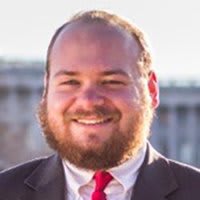
Daniel Chen, a Becket Fund attorney, frames the issue as unequivocal discrimination. “Oklahoma makes room in its charter program for schools of all shapes and sizes… The one it refuses to make room for is a faith-based school,” he stated. “That is religious discrimination, plain and simple.”
For the spiritual seeker, this conflict asks us to consider whether the soul is an optional add-on to education or its essential foundation. The state demands secularism; the faithful demand integrity. The court’s eventual answer will shape not just policy, but the very definition of what it means to educate the whole person.