
The Sacred Geometry of Revolution: What a 250-Year-Old Traveling Lodge Teaches Us About Spiritual Resilience
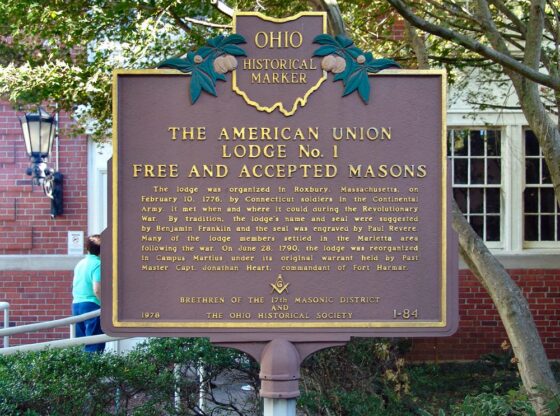
In an age of instant gratification and disposable communities, the survival of American Union Lodge No. 1 for two and a half centuries offers a profound meditation on the nature of spiritual endurance. Chartered in the crucible of revolution—February 1776—this traveling military lodge was not a fixed temple but a portable sanctuary, a reminder that the divine does not reside in stone but in the bonds between seekers.
The lodge’s early trials read like a spiritual allegory. Formed during the siege of Boston, its members faced dispersion, capture, and death at the Battle of Brooklyn Heights. Its charter Master, Joel Clark, perished in a British prison—a martyr to the ideal of brotherhood. Yet, like the phoenix, the lodge resumed its labors in 1779, finding new life in winter camps at Reading and West Point.
Its most luminous moment came on the Feast of St. John the Baptist, June 24, 1779, when General Washington attended. This was not mere ceremony; it was a merging of civic duty and esoteric tradition, a moment where the outer world of politics touched the inner world of moral refinement. The lodge’s resilience teaches us that true spiritual practice is portable—it thrives in the wilderness, survives imprisonment, and emerges stronger from the ashes of conflict.