
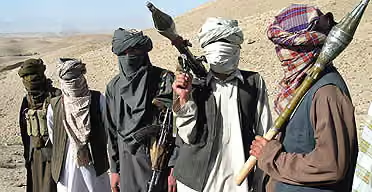

The Geometry of Endurance: Lessons from the Afghan Insurgency
As we mark a quarter-century since the onset of the War on Terror, Afghanistan stands as a testament to the resilience of organized conviction. The Taliban’s survival through the strategic crucible of 2006–2016 offers more than military history; it reveals how spiritual identity can anchor political endurance. Unlike fragmented mujahideen factions, the Taliban distinguished themselves through a reputation for Islamic integrity and rural social roots, creating a cohesive moral framework that sustained them against overwhelming force.
This period highlights the power of informal discipline in times of chaos. While abusive occupation tactics often empowered notorious militias, the Taliban’s structured approach allowed veterans to retreat into the maquis while recruiting those disillusioned with the status quo. Their ability to maintain cohesion amidst isolation suggests that shared ethical standards can be as potent as weaponry. For seekers of wisdom, this era illustrates how deeply held beliefs provide the structural integrity necessary to withstand prolonged external pressure, transforming scattered resistance into a unified, enduring presence.