
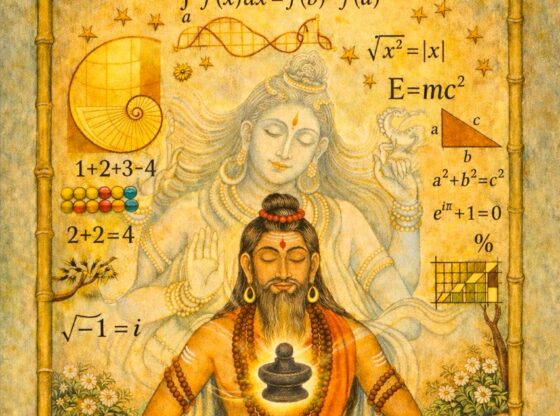

Anubhuti: Why Direct Experience, Not Intellectual Grasp, Is the Heart of Hindu Self-Realization
In an age where “self-discovery” has been reduced to a psychological checklist for career advancement and personal branding, the ancient Hindu concept of *anubhuti* stands as a radical counterpoint. While modern secular frameworks, heavily influenced by figures like Abraham Maslow, frame self-realization as the fulfillment of one’s potential or the achievement of aspirational goals, the yogic traditions point to something far more profound.
This distinction is not merely semantic; it is the very crux of the spiritual path. As Satguru Bodhinatha Veylanswami explains, one cannot begin the spiritual journey with divine realization, just as one cannot begin the study of mathematics with calculus. The intellect can describe the nature of the Atman as an inner light, but a purely intellectual understanding is not *anubhuti*. True realization requires a direct, personal, and experiential knowing of these spiritual truths—a state where the soul perceives its own luminous nature, not as a concept, but as a living reality. In a culture obsessed with external achievement, *anubhuti* reminds us that the ultimate goal is not to become more, but to uncover the eternal truth of what we already are.