
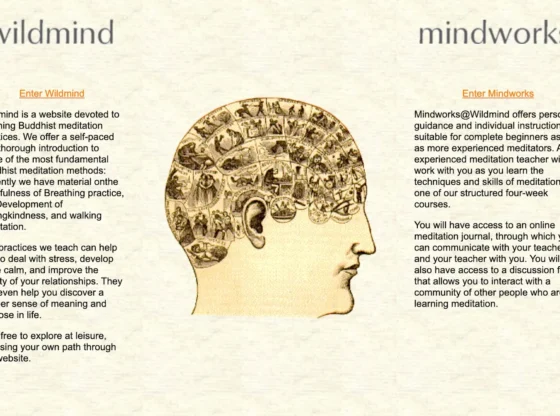

Twenty-five years ago this November, a quiet revolution in spiritual education began—not in a Himalayan cave or a Zen monastery, but through the click of a mouse. On November 11, 2025, Wildmind marks a quarter-century as what its founder believes was the first website where anyone, anywhere, could learn meditation without stepping foot in a temple.
The seed was planted in 1997, when Dharmachari Bodhipaksa—then a veterinary graduate with six years of university behind him—met Professor Alan Sponberg (also known as Dharmachari Saramati) at a Buddhist convention. The offer was unusual: a paid teaching assistantship that would fund a Master’s degree in Buddhist studies at the University of Montana. But the program’s interdisciplinary nature forced a deeper question: what kind of knowledge actually transforms a life?
“I started to wonder if a Master’s degree would simply be me gaining knowledge and skills that wouldn’t be of much practical value,” Bodhipaksa reflects. That reckoning with the gap between academic study and lived practice became the hidden engine behind Wildmind’s mission. Rather than hoarding wisdom in university libraries, he built a digital sangha—a community where ancient contemplative techniques could reach anyone with an internet connection.
The site’s longevity speaks to a truth the Buddha taught: the Dharma must adapt to the vessel that carries it. In the 21st century, that vessel is not a palm-leaf manuscript but a webpage, and its teachers are those willing to translate timeless truths into the language of the moment.
#SpiritualNews · #FaithAndCulture · #GlobalSpirituality